
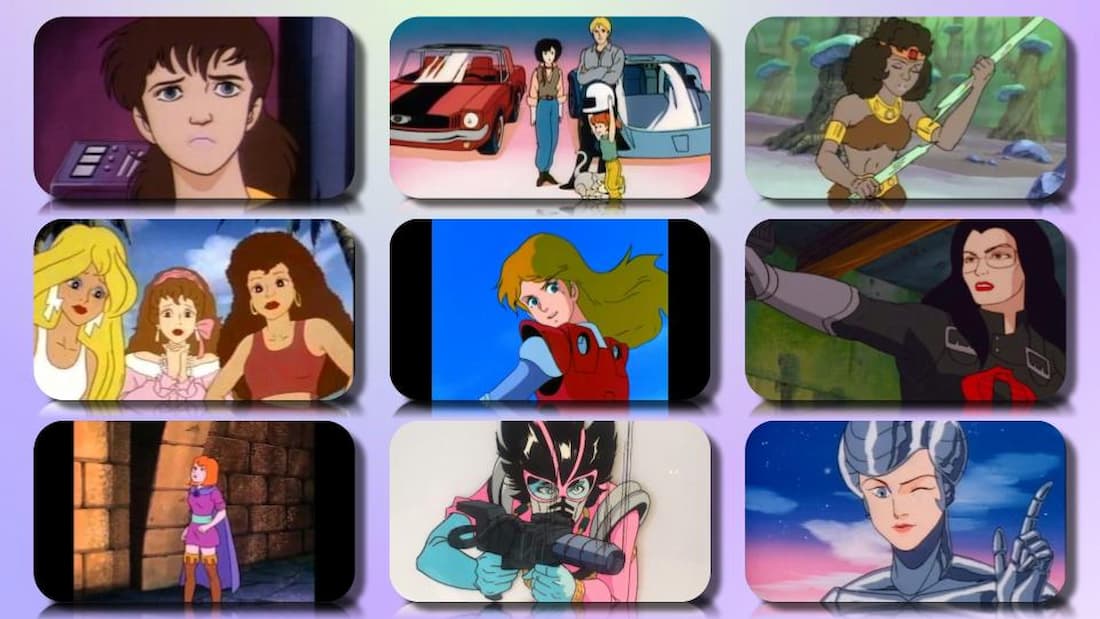
Animated cartoons may have been around since the turn of the 20th century, but they largely catered to a male audience by giving them lots of action and explosions.
However, as the years went by, cartoons started giving girls just as much to cheer for. A ton of iconic and hugely popular female characters that we know today first graced the screens in the 1980s.
While some of these characters were adapted into live-action movies and series, others were not so lucky. Those who watched cartoons during that decade know that these women were alluring and inspiring in equal measure.
Therefore, today, we bring you 42 of the finest animated female characters from the ’80s, including Jessica Rabbit. While women in the real world were battling for positions of power at the time, these cartoon women were doing their best to shatter the glass ceiling and stand equal to their animated male counterparts.
1

Catra (She-Ra: Princess of Power)

She-Ra: Princess of Power was a show that gave viewers more female characters than most shows did at the time. So, besides the titular character, it was Catra who managed to stand out in the crowd.
Not only did this feline foe seek power, but she also held a serious grudge against Adora/She-Ra. Needless to say, she was seen as the main antagonist in both the toy line and cartoon before being replaced by Hordak.
Catra proved to be a worthy enemy and relied heavily on her magical abilities and mask to make an impact. She was agile and had great reflexes and strength, as well as the ability to teleport (as shown in one episode).
Recommended:
2
The Misfits (Jem and the Holograms)

There is no denying that everyone loves girls who can rock, and Jem and the Holograms was a cartoon that ended up providing two whole bands’ worth of badasses. The Misfits, however, were better.
The formidable group was known for making songs about taking charge, causing mischief, and being assertive at all times. That is one reason why they resonated with youngsters at the time.
However, their antics also saw them committing small crimes and, in the process, coming across as the true bad girls of rock. While The Misfits weren’t evil per se, they certainly were raw and driven.
That being said, the girls were also pushed by their selfish manager into doing worse deeds, only to help his agenda.
Recommended:
3
Lisa Simpson (The Simpsons)

Even though Lisa rose to prominence during the '90s, she did make her television debut during the late '80s, which justifies her presence in our story. The smartest of all The Simpsons characters, she is an intellectual of sorts.
Even though she comes across as reserved and a tad unapproachable at first, she has a warm heart that even allows her to be vulnerable at times. Lisa has a passion for things that require creativity and productivity; things that not a lot many people excel at in life.
Therefore, it wouldn't be an exaggeration to assert that a lot many smart kids would have had a great time both watching and relating to her well-thought-of character sketch. Needless to say, Lisa Simpson is as original as she is gentle.
However, if one tries to mess with her, she will have no qualms about putting them in their place. That way, she can also be condescending if she truly loses it. Interestingly, in the early Tracey Ullman Show shorts, Lisa displayed none of the intelligence she later became known for and was more of a female Bart.
Recommended:
4
Marge Simpson (The Simpsons)

The homemaker and matriarch of the Simpson family, Marge is one of the five main characters in The Simpsons TV series. In fact, it wouldn't be an exaggeration to claim that she is one of the most amazing female cartoon characters of all time.
She is the moralistic force in her family and often the only one in the house who makes sense. While the other members of the family, except Lisa, are mostly seen turning both the house and town upside down with their antics, it is Marge who tries to maintain order in the household.
Aside from her duties at home, Marge has also been seen flirting briefly with several men throughout the series. However, her love for Homer and her children knows no bounds. Voiced by Julie Kavner, she first appeared on television in The Tracey Ullman Show short "Good Night" on April 19, 1987.
5
Kiki (Kiki's Delivery Service)

One of the most upbeat and kind-hearted characters to make it to our story, Kiki grew up with her loving parents and talking cat, Jiji. She is someone who wants to follow in her mother's footsteps.
Soon into the movie, we catch her delivering packages on her flying broomstick. Indeed, she used broomsticks to fly long before the characters of Harry Potter stormed the screens.
Even though she is making steady progress in her profession, she also tries to make time to practice magic and explore her new town. However, she still has a lot to learn about both magic and adulthood.
6
Evil-Lyn (He-Man and the Masters of the Universe)

Make way for the sexy and sensational Evil-Lyn, who turned out to be one of the finest antagonists in He-Man’s gallery of villains. She was seen wearing a crown and cape and had a tremendous amount of dark magic to back her antics.
She wasn’t just a capable foil for musclebound heroes, but she was also a driven and determined woman who could improvise and change according to the demands of the situations.
Needless to mention, Evil-Lyn often worked for her own interests and was even quite vocal about her relentless desire to rule herself. That is perhaps why she ensured that her spells worked with disguise, deceit, and mind control.
7
Magica De Spell (DuckTales)

Magica De Spell, who first appeared in the "Uncle Scrooge #36" comic, turned out to be a fan-favourite character in the DuckTales cartoon. Her relentless attempts to steal the Number One Dime and claim Scrooge's success and luck with money were appreciated by ardent fans of the show.
She was designed to look like an attractive witch, which is why she was seen with a raven pet, jet black hair, purple eyeshadow, and a dark wardrobe; each of which helped in lending her a credible villainous look.
While she had a wide range of sorcery, she was also a skilled manipulator who had little trouble tricking others into betraying their own personality. Needless to say, Magica embraced the life of an evildoer with elan.
That said, many of the schemes of the incredibly entertaining sorceress either failed miserably or looked a tad ludicrous, which is perhaps why we feel that her character deserved better. Created in 1961 by Carl Barks for the Duck universe, she is an Italian sorceress, and her name uses the Italian word for "magical".
8
Vanessa Warfield (M.A.S.K.)

The Ice Queen of V. E. N. O. M. (Vicious Evil Network of Mayhem) was not a woman you'd have taken lightly even in your dreams. Vanessa Warfield was leader Miles Mayhem's most valuable agent and a master of tactics.
Her vehicle gave her the upper hand in covert operations and was an arsenal of hidden weapons. Additionally, she was able to thrive on her demolition skills and use of disguises.
As if that didn't make her strong enough, she was also quite sensual and dangerous when she needed to be. However, like most villains in the real world, her overconfidence led to her downfall.
While she was seen mocking the heroes and her teammates alike, she, at one point, was seen training ravens and treating them better than any human. That said, it also appeared as if she despised men from the core of her heart.
9
Madame-O (Bionic Six)

Those who remember the Bionic Six cartoon series agree that its animation and main villain, Dr Scarab, were its high points. While the family of heroes came across as a bit bland, it was Madame-O who added a touch of mystery to the show.
She was a masked figure in a strange pink suit, blue skin, and wild hair, who was as feminine as she was devious. All thanks to her enhanced strength and weaponized sonic harp, she was able to create a lot of chaos for the heroes.
Madame-O, who was known for ending each sentence with the word "darling", was an older woman before being altered by Dr Scarab. She featured quite a bit in the 65-episode run, but not a lot has been revealed about her background. Described as Dr. Scarab’s henchwoman, she is bested by an accomplished fighter on the occasions when the two physically fight each other one-on-one.
10
Miriya Parina (Robotech)

Miriya Parina was an ace pilot with a vicious streak who was seen as one of the greatest Zentraedi warriors. A major character in the series, she finally met her match in Max Sterling during one of the events.
That said, it has to be noted that she was a fierce warrior who found her weakness in no more than one person. Moreover, her experiences with the humans soon went on to change her perspective and, therefore, prompted her to marry Max without knowing what it entailed.
Miriya, who often proved to be a valuable asset in combat, ultimately wanted to settle down and simply be a mother and wife. Is it surprising then that she found her love while in the middle of a battle?
11
Mother Brain (Captain N: The Game Master)
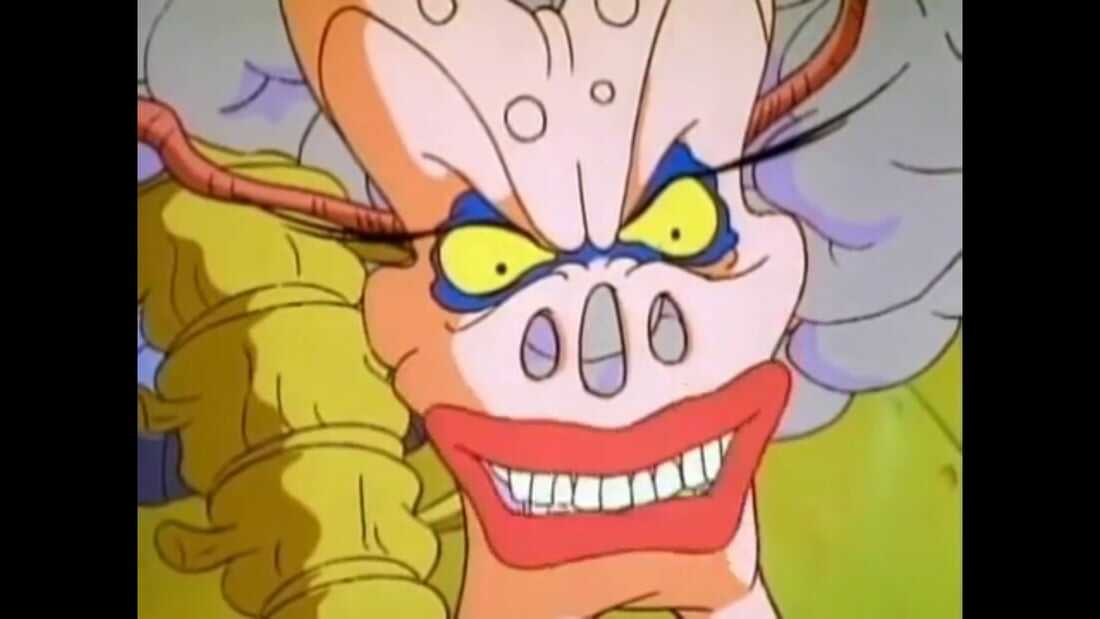
Mother Brain from Captain N: The Game Master had a large arsenal of tools at her disposal. She also could generate electricity and had an endless supply of wicked schemes to try and take over the Palace of Power.
It is not surprising then that she was considered to be a deterrent by the heroes. While she had several characters who worked under her, her biggest bumbling assistants were Eggplant Wizard and King Hippo (from "Kid Icarus" and "Punch-Out!!", respectively).
Even though Mother Brain's attempts were usually impeded by Kevin, Princess Lana, and their pals, one couldn't deny that she was an intimidating foe whose cruelty and evil could get the better of her enemies.
12
Rainbow Brite (Rainbow Brite)

Rainbow Brite was so popular during the '80s that she could be seen on our bed sheets, lamps, and even our lunch boxes. Needless to mention, most people who grew up watching her during the peak of her fame ended up showering her with love.
While one remembers having a Rainbow Brite cuddly toy at the end of their bed, the character truly made her way into the hearts of her fans through the 13-episode TV series that aired between 1984 and 1986. She headlined just one feature film, Rainbow Brite and the Star Stealer, having appeared in a few television specials before its release.
13
Princess Paw Paw (Paw Paws)

Princess Paw Paw was the tribal princess of the animated series Paw Paws. She was the daughter of the Wise Paw – the chief of Paw-Paws – and a beautiful princess who was adored by everyone in her village for her caring and kind nature.
She summoned her flying horse and brought the Totem Bear, Tortoise, and Eagle to life with the mystic moonstone that she wore on her necklace. The Princess used her aides and her capabilities to fight for her people and help them during tough times.
Her appearance alone was cute enough to attract viewers.
14
Smurfette (The Smurfs)

Smurfette was long the only female member of the 100-strong group of Smurfs, until the creation of Sassette. She was introduced to cartoon audiences in 1981 as a female counterpart to Clumsy Smurf, Papa Smurf, Brainy Smurf, and all the other little blue dudes in the Smurf Village which was only populated by males.
Given the fact that there was no other woman in or around the village, she was almost always in demand. Needless to say, her help was needed not only for cooking or sewing but also for being a sympathetic ear. Creator Peyo loosely based her look on French actress Mylène Demongeot, complete with lush blonde hair, mascara on her eyelids and high-heeled shoes.
15
Lydia Deetz (Beetlejuice)

Loosely based on the movie of the same title, the cartoon version of Lydia was a breath of fresh Gothic air in the universe of cartoons. In a rather stark setting, she managed to stick out with her black hair, pale skin, and purple eyeshadow.
Girls whose interests and looks deviated from what was considered "normal" at the time resonated with the character massively. Also, the fact that she was isolated and alone made a ton of people empathize with her, thereby providing the character with a layer.
In the Neitherworld, Lydia could be seen being herself, and her friendship with Beetlejuice allowed her to be spirited. Needless to say, she had lots of fun in her topsy-turvy home away from home.
16
Strawberry Shortcake (The World of Strawberry Shortcake)

Strawberry Shortcake was originally just a character used by American Greetings Entertainment to grace their greeting cards. However, in the 1980s television special The World of Strawberry Shortcake, she was the girl at the centre of a group of other young women, each with dessert-themed names, clothing, and shticks.
Needless to say, she went on to become an animated female role model for young girls with her show. In the early 2000s, DIC Entertainment decided to relaunch the line of everything Strawberry to cash in on the character's popularity. The character was created by Barbi Sargent, then a freelance artist for American Greetings, and first appeared on a Valentine’s Day greeting card in 1972–1973.
17
Princess Allura (Voltron)

Princess Allura from Voltron was the princess of the formerly-extinct Planet Altea. She was a formidable combatant, strategist, speaker, and alchemist, who was seen assisting her father in his war council.
Additionally, she also commanded the Castle of Lions in the fight against Zarkon and piloted the Blue Lion until her death. Over time, she established herself as the face of the resistance against the Galra.
She was willing to stop at nothing to restore peace and balance in the Universe, even if it meant that it had to be at the cost of her own life. According to Voltron: The Third Dimension, the worst fear of a man who cherishes her was that she would be forced to marry the evil Prince Lotor.
18
Sheila (Dungeons & Dragons)

Sheila from Dungeons and Dragons was a friendly and caring individual who could go to any extent to ensure the safety of her friends and her younger brother. Even though she came across as reticent and nervous with a deep-seated monophobia, it didn't stop her from putting her bravery on display when she absolutely needed to.
While she was usually the first to point out the shortcomings or dangers of the group's plans, she also stood for her dear ones when they needed her the most.
All thanks to her magnanimity, she received unexpected rewards, such as being offered to become Queen of Zinn which she politely declines. Furthermore, she was also able to redeem Karena, Dungeonmaster’s daughter, from evil. Ironically, Dungeonmaster made her the group’s thief precisely because she would never have chosen that role, trusting her to use the cloak of invisibility responsibly.
19
Tess Darrett (Pole Position)

Pole Position was a video game that was released in 1982 by Namco. Its popularity led to the creation of a Saturday morning cartoon of the same name that was released in 1984.
While the cartoon varied wildly from the video game, it did manage to attract kids who were enticed by racing cars. Another reason to have seen the show was the two siblings who took over the family crime-fighting business from their deceased parents.
While Dan Darrett was hot-headed, his sister Tess Darrett was the epitome of cool. Since she was the older sibling, she was the leader of the team and the de facto mother figure to Dan and their younger sister Daisy.
20
Rook Bartley (Robotech: The New Generation)

Rook Bartley, better known as the Red Warrior during her time as a vigilante, was someone who was known to have been raised without parents on the mean streets of an alien-controlled Earth.
After she decided to join a biker gang known as the Blue Angels, the group did its best to teach her to survive in a world controlled by the alien forces of the Invid.
She was also taught how to ride a motorcycle and proved to be a quick learner. After she grew up, the Blue Angels were at war with another, more belligerent gang called the Red Snakes.
Therefore, Bartley did her best to fight members of the Red Snakes when they started attacking the civilians.
21
Lady Lovely Locks (Lady Lovely Locks)

Lady Lovely Locks was the titular female character from Lady Lovely Locks who was known for her long, blonde hair with a rainbow streak. However, what separates her from other characters in our story is that she's also got the power to see into other people's thoughts and feelings.
Backed by the Pixietails, she does her best to protect her homeland—the Kingdom of Lovelylocks—from wrongdoers whenever she can.
22
Bianca, Jett, Larke and Nikki (Beverly Hills Teens)

Beverly Hills Teens would introduce the viewers to Bianca the scheming brat, Jett the rocker, Larke the model, and Nikki the actress. The show revolved around the lives of the aforementioned rich kids.
While it showed its namesake teenagers residing in the exclusive enclave of Beverly Hills, California, it also went on to demonstrate exaggerated wealth that was exemplified by mansions, yachts, and limousines.
In addition, it touched upon typical teenage concerns such as schoolwork, friendships, and romantic rivalries, among other things.
23
Firestar (Spider-Man and His Amazing Friends) (Spider-Man and His Amazing Friends)

Angelica Jones, better known as Firestar, is a college student at Empire State University and one of the trio at the heart of Spider-Man and His Amazing Friends. Along with Peter Parker and Bobby Drake, she lives in the home of Peter’s Aunt May, which they share with a pet dog named Ms. Lion.
After working together to defeat the Beetle and recover the Power Booster he stole from Tony Stark, Firestar, Spider-Man and Iceman decide to team up permanently as the Spider-Friends. Like Iceman, she can use her powers to get into costume, as shown in the opening titles.
A running gag on the show has Firestar and Iceman waiting for Peter to change into his Spider-Man suit. Together, the superheroes battle various supervillains.
24
Princess Ariel (The Little Mermaid) (The Little Mermaid)

Fun-loving and mischievous, Ariel is the mermaid protagonist of Disney’s The Little Mermaid franchise, which began with the 1989 film. Her parents are King Triton and the late Queen Athena of the merfolk, and she is their seventh-born and youngest daughter.
Over the course of the original film, Ariel becomes human and marries Eric, a human prince. Jodi Benson voices her, while Halle Bailey portrays her in the 2023 live-action film.
She is the only Disney Princess to reach parenthood in Disney’s history. The direct-to-video sequel The Little Mermaid II: Return to the Sea features Ariel as the mother of Melody, the film’s protagonist.
25
Teela (He-Man and the Masters of the Universe) (He-Man and the Masters of the Universe)

A capable female fighter, Teela appears as one of the primary characters in the He-Man and the Masters of the Universe animated series and is a loyal friend to He-Man. She also appears as a guest character in its spinoff, She-Ra: Princess of Power.
Described as a warrior goddess imbued with the spirits of great warriors long deceased, Teela roams the deserted landscapes of Eternia atop a unicorn. In the stories written by Paul Kupperberg for DC Comics, she is a hotheaded member of the Royal Guard of Eternia who later rises to Captain of the guard.
The DC minicomics reveal her to be a clone of the Goddess, whom Skeletor had captured twenty years earlier. Man-At-Arms rescues the infant clone, names her after the Goddess and raises her as his own daughter. According to the Spirit of Grayskull, Teela will one day become the guardian of Castle Grayskull, a title she would be honored to accept.
26
Cheetara (ThunderCats) (ThunderCats)

Cheetara belongs to a band of cat-like humanoid aliens, the fictional group at the heart of the ThunderCats media franchise. Created by Tobin Wolf, she is one of the notable characters of the animated television series ThunderCats, which ran from 1985 to 1989 as a syndicated after-school weekday cartoon.
On screen, Cheetara shares her world with fellow cat-like characters Lion-O, Panthro, Tygra, Snarf, WilyKit and WilyKat, and Jaga, while Mumm-Ra serves as the main villain of the series. Her adventures were animated in Japan by Pacific Animation Corporation and co-produced by Rankin/Bass Productions.
While her look was drawn in Japan, the show that featured her was produced, written and voice acted in the United States. Alongside the cartoon, the franchise launched a line of action figures produced by LJN.
27
Gloria Baker (M.A.S.K.) (M.A.S.K.)

Gloria Baker is a valuable asset to the M.A.S.K. team and has also appeared in other fiction and media.
Gloria was not part of the first wave of M.A.S.K. toys. There may have been plans at one point to include her in that wave, but this was discontinued. It took until 1987’s Split Seconds series for her to get her first toy with an action figure.
28
Jem (Jem) (Jem)

Jerrica Benton is the owner of Starlight Music and operator of Starlight House, a foster home for girls, in the animated television series Jem. Her alter ego, Jem, is the leader of Jem and the Holograms and provides the lead vocals in the band. Both Starlight Music and Starlight House were inherited from her late father, Emmett.
Using the power of Synergy, a powerful computer with holographic capabilities, Jerrica can become Jem by touching her special star-shaped Jemstar earrings. Synergy’s holograms are integral to maintaining the illusion.
Most episodes feature the subplot of Jerrica hiding her identity from others, especially Rio Pacheco, her long-time boyfriend and road manager. Samantha Newark provides her speaking voice in the series.
29
She-Ra (She-Ra: Princess of Power) (She-Ra: Princess of Power)

She-Ra lends her name to She-Ra: Princess of Power, an American animated series produced in 1985 by Filmation. A spin-off of He-Man and the Masters of the Universe, the series was aimed primarily at a young female audience to complement He-Man’s popularity with young males. It premiered in 1985 and ended in 1987, after two seasons and 93 episodes.
Unlike He-Man, which was based on the Masters of the Universe toy line by Mattel, She-Ra was created through a collaboration between Filmation and Mattel. Uncredited writers Larry DiTillio and J. Michael Straczynski created the initial group of characters and premise, and Mattel provided financial backing for the series and an accompanying toy line.
On March 22, 1985, several months before the series aired, Filmation released the animated film He-Man and She-Ra: The Secret of the Sword. The film is composed of what would be the first five episodes of the She-Ra series, starting with Into Etheria.
30
Hello Kitty (Hello Kitty's Furry Tale Theater) (Hello Kitty's Furry Tale Theater)

With white fur, a yellow nose and no visible mouth, Hello Kitty is the cheerful and kind kitten director of the theater in Hello Kitty’s Furry Tale Theater. The American animated series sees her and her friends, and occasionally family, doing their own versions of popular fairy tales and stories.
In many of these tales, she plays the protagonist or a supportive fairy, while Mama Kitty and Papa Kitty take on motherly and fatherly roles. Each of the 13 episodes consists of two 11-minute cartoons, and each show spoofs a well-known fairy tale or movie.
Tara Strong voices Kitty, and the series is notable for featuring Strong in her first major role as a voice actress. DIC Animation City and MGM/UA Television Productions co-produced the show, and Toei Animation animated it.
31
Steelheart (Silverhawks) (Silverhawks)

Sergeant Emily Hart, known as Steelheart, is a SilverHawk and the twin sister of Will Hart. Together, the siblings are the scientists and gearheads of the team and share an empathic bond, so when one feels something, the other feels it as well.
A human law enforcement officer, Steelheart was modified into a cyborg to withstand the effects of hyper travel through space, which grants her enhanced strength, agility and speed. Her body features built-in wings, a built-in laser in her arm and retractable talons in her feet. Only her brother outmatches her in strength, and she and Will created the four Fighting Hawks, with Rayzor as her weapon-bird.
She and Will are also the only SilverHawks who had real stainless steel hearts implanted during their transformation. The procedure enhanced their psychic bond, enabling Steelheart to communicate with her brother even across vast distances.
32
April O'Neil (Teenage Mutant Ninja Turtles) (Teenage Mutant Ninja Turtles)

April O’Neil is the first human ally of the Ninja Turtles, and she made her first appearance in 1984 in issue #2 of the Mirage comic series as a computer programmer. The Turtles’ first animated series later portrayed her as a strong-willed news reporter.
Renae Jacobs voiced her in the 1987 animated series, which depicted her as a red-haired adult woman, as did the comic series. Later media cast her as a warrior in the Archie Comics series Teenage Mutant Ninja Turtles Adventures and as a teenager in the 2012 and 2018 animated series.
On film, Judith Hoag, Paige Turco and Megan Fox have portrayed her. Her love interests have varied, though she is typically paired with the vigilante Casey Jones.
33
Diana the Acrobat (Dungeons and Dragons) (Dungeons and Dragons)

Smart and outspoken, Diana the Acrobat is a character in the 1983 Dungeons & Dragons cartoon series. Long before coming to The Realm, she was a gold-medal-winning gymnast and competitive horseback rider.
Her time fighting the monsters and dodging the dangers of the Dungeons & Dragons world has honed those skills even further. With her confidence and courage in the face of foes, she makes an excellent leader whenever Hank is not around to do the job.
Having been involved in sports almost since the time she could walk, Diana takes great pride in her physical skills. Nothing frightens her more than losing her edge.
34
Penny (Inspector Gadget) (Inspector Gadget)

Precocious, intelligent and tomboyish, Penny is the niece of Inspector Gadget in the franchise that began in 1983 with the DIC Entertainment animated television series Inspector Gadget. Confirmed to be an orphan, she seems to have no family other than her uncle, whom she loves very much and looks up to.
Along with her dog, Brain, Penny is the one truly responsible for thwarting Dr. Claw and his organization, M.A.D., while her uncle gets all of the credit.
Leaving the credit to Gadget makes sense, since Penny would be in serious danger if she got it. She often looks around the hideout of M.A.D. to find out what its agents are up to, and when Claw’s henchmen catch her, she either escapes by herself or calls Brain to rescue her.
35
Arcee (Transformers) (Transformers)

A female Autobot warrior who turns into a pink convertible, Arcee is the main female Transformer of the franchise, having made more appearances than any other. Her 1980s cartoon depiction is voiced by Susan Blu in English and by Masako Katsuki in Japanese.
In the first year of the Transformers brand, Hasbro rejected the notion of female Transformers. While working on the script for The Transformers: The Movie in late 1984, Ron Friedman successfully insisted on including at least one, which resulted in Arcee.
For much of her time in Transformers cartoons, Arcee mostly filled the role of a token female until Transformers: Prime gave her a more distinct personality and a blue color scheme. Very little is known about her early life on Cybertron, other than that she enjoyed oil baths.
36
Baroness (G.I. Joe) (G.I. Joe)

A dark, sensual femme fatale, the Baroness is a villainess who serves as chief intelligence officer of Cobra and a top lieutenant to Cobra Commander. First appearing in the G.I. Joe: A Real American Hero comic series by Marvel Comics in June 1982, she was adapted into the 1985 animated TV series.
Officially the head of Cobra intelligence operations, she is a world-class expert in cryptography and psychological warfare. Her beauty is matched only by her ruthlessness, cunning and absolute loyalty to Cobra.
The spoiled offspring of European aristocrats, Anastasia Cisarovna was first involved in student radicalism, dabbled in extremist fringe groups and finally graduated to international terrorism. She is believed to have been trained as a spy and saboteur at an exclusive facility run by a former Warsaw Pact intelligence agency.
37
Wish Bear (Care Bear) (Care Bear)

Wish Bear is a Care Bear who can make and grant wishes, and The Care Bears’ Big Wish Movie centers on her. As a cub, she found her new friend Twinkers, a wishing star, and she tells that story to the Care Bears atop the roof of an observatory in Care-a-lot.
After some of her wishes do not work, she worries that the other bears have overlooked her abilities. In response, she wishes for a few new friends who care more than she does, and the result is Messy Bear, Me Bear and Too Loud Bear.
The trio causes further trouble for Wish Bear, Twinkers and all of Care-a-lot, the cloud-filled home of the Care Bears. Toronto’s Nelvana produced and self-financed the film, which later received favorable reviews from Parenting magazine and the Pittsburgh Post-Gazette.
38
Princess Ariel (Thundarr The Barbarian) (Thundarr The Barbarian)

A formidable young sorceress, Princess Ariel travels the world on horseback with the muscular barbarian Thundarr and Ookla the Mok, a mighty humanoid ape-like creature, in Thundarr the Barbarian. The trio fights injustice together.
Their main adversaries are evil wizards who combine magical spells with reanimating technologies from the pre-catastrophe world, and some of these wizards enlist mutant species to do their bidding. Other enemies include the werewolves of The Brotherhood of Night and the cosmic Stalker from The Stars.
Thundarr was once a slave to Sabian until Princess Ariel freed him and gave him the Sunsword, which he uses as a weapon against evil wizards. The Sunsword projects a blade-like beam of energy and is magically linked to Thundarr, so only he can use it.
39
Ursula (The Little Mermaid) (The Little Mermaid)

Banished from Atlantica, where she once lived in the royal palace of King Triton, Ursula is the villain of The Little Mermaid. She makes her home in the remains of a leviathan, where she waits for the chance to get her revenge on Triton and become Queen of Atlantica.
Very manipulative, Ursula commands her moray eels, Flotsam and Jetsam, to watch Triton’s youngest daughter, Ariel. Through the song Poor Unfortunate Souls, she proposes an agreement to transform Ariel into a human for three days.
Her basic look was based on the drag queen performer Divine. Pat Carroll, a contralto who was cast to voice Ursula, deliberately deepened her own voice for the role.
40
Gadget (Chip 'n Dale Rescue Rangers) (Chip 'n Dale Rescue Rangers)

Gadget Hackwrench is a young blond-haired mouse who serves as the pilot, mechanic and second-in-command of the team in Chip ‘n Dale: Rescue Rangers. Voiced by Tress MacNeille, Gadget joins the protagonists, Chip and Dale, along with Monterey Jack and Zipper.
The detectives deal with crimes that are often too small for the police to handle, usually with other animals as their clients. Mafia-style tabby cat Fat Cat and mad scientist Norton Nimnul are the two arch-villains the Rescue Rangers frequently go up against.
Except for the five-part set of episodes made from the pilot movie, each 22-minute episode is self-contained, with the sleuths gathering clues and investigating before the case is resolved, usually in dramatic fashion. A humorous wrap-up scene between the Rangers then closes each episode.
41
Wonder Woman (Super Friends) (Super Friends)

Wonder Woman debuted in DC Comics in All Star Comics #8, published October 21, 1941. Created by American psychologist and writer William Moulton Marston and artist Harry G. Peter, she is an Amazon-Olympian princess and warrior known in her homeland of Themyscira as Princess Diana of Themyscira. When blending into the society outside her homeland, she sometimes adopts her civilian identity, Diana Prince.
Her outfit has been reinvented for many different adaptations, including a Hanna-Barbera version. This depiction shows her as a noticeably tall woman with straight waist-length black hair, blue eyes and a lean, athletic build, wearing a red gold-trimmed tube top, blue and white star bottoms and red and white boots, with no cape.
That costume tries to blend the kitschy 50s patriotism of her outfit with a more Greek look while keeping most of the color scheme. Ever since her debut, DC Comics has published the Wonder Woman title almost continuously.
42
Jessica Rabbit (Who Framed Roger Rabbit)

Renowned as one of the best-known sex symbols in animation, Jessica Rabbit is the human-cartoon wife of Roger Rabbit. She appears in the novel Who Censored Roger Rabbit? and its 1988 film adaptation, Who Framed Roger Rabbit.
Author Gary K. Wolf based Jessica primarily on Red from Tex Avery’s Red Hot Riding Hood, with her attitude drawn from Tinker Bell and her design from Margaret Kerry. For the film version, Richard Williams tried to make her like Rita Hayworth and took her hair from Veronica Lake.
Before Robert Zemeckis was brought on board as director, Jessica had a different design and was to be voiced by Russi Taylor, who went on to provide the voice in test footage from 1981. Upon his hiring, Zemeckis brought along Kathleen Turner, whom he had worked with in Romancing the Stone, to voice Jessica.