
Top 50 Most Popular Horror Movie Characters Of All Time
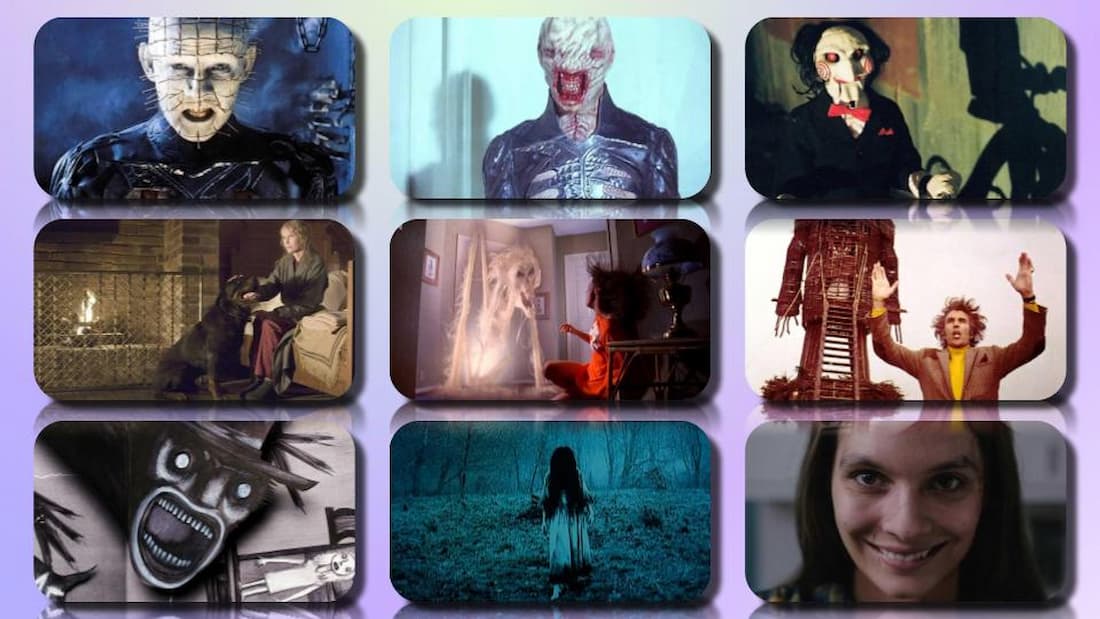
A good scary movie is not only remembered for its jump scares and mysterious plot twists, but also for its compelling characters that have enough distinct personality traits to keep the viewers engaged.
Indeed, a lot many scary movie fans across the globe share the opinion that a horror feature is only as interesting as its characters.
While some of these characters involve individuals driven by a dark compulsion and supernatural entities, others delve into more profound aspects, serving as conduits for the exploration of fear, grief, loss, and mortality.
It is not surprising then that most successful horror credits over the years have managed to attain cult status solely because they are remembered for their characters.
Also, while there's always something inexplicably fascinating about kickass villains, there wouldn't be a point in their existence if they are not matched by a conventional hero or by exciting supporting characters.
Thus, we have taken the onus upon ourselves to compile a list of the most memorable and iconic characters from horror movies, dating right back to the earliest days of the genre.
These supremely entertaining, deep, and intriguing characters have managed to stand the test of time and will continue to enthrall viewers for decades to come.
1

Jack Torrance (The Shining)

Widely acclaimed as a landmark in horror cinema, "The Shining" delivers some of the genre’s most haunting moments, anchored by Jack Nicholson’s astounding portrayal of Jack Torrance. His riveting performance transforms the character into one of film’s most memorable villains and elevates the movie’s unnerving atmosphere.
Audiences frequently cite Nicholson’s depiction as the ultimate cinematic case of cabin fever, capturing psychological unraveling in a way few movies ever have.
Under Stanley Kubrick’s masterful direction, the story examines how isolation and pressure can corrupt an ordinary man, twisting him into a figure of terror that lingers long after the film ends.
Yet Jack Torrance is no blank slate; his troubled past and personal weaknesses leave him uniquely vulnerable to the Overlook Hotel’s supernatural influence, making his descent into madness feel both tragic and inevitable.
At first, Torrance appears introspective and restrained, but as events spiral, his demeanor shifts dramatically—revealing alarming instability with each passing scene.
The sinister forces at the Overlook prey on Torrance’s fractured mind while manipulating his son’s psychic abilities, their dark presence intensifying as winter’s chill sets in.
Few scenes in horror have reached the iconic status of the infamous “Here’s Johnny!” moment—a sequence that has defined Jack Torrance and inspired countless imitations throughout popular culture.
Recommended:
2
Norman Bates (Psycho)

Alfred Hitchcock’s ground-breaking film Psycho is often credited with changing the face of cinema and redefining the horror genre.
At the heart of the movie is Norman Bates, the seemingly mild-mannered owner of the quiet Bates Motel. His courteous and shy exterior quickly gives way to a complicated and disturbing psyche.
Norman’s severe psychological struggles drive him to chilling acts, like spying on unsuspecting guests—only a prelude to the film’s notorious violence. His transformation into a menacing figure is cemented by the legendary shower scene, where he dons his late mother’s persona to commit murder.
Beyond his terrifying actions, Norman Bates’ introverted and soft-spoken nature sets him apart from traditional villains, making his hidden menace even more unsettling. The delicate balance between innocence and insanity makes him a uniquely complex character in horror cinema.
Anthony Perkins’ portrayal of Bates has become legendary, with the infamous shower scene etched into pop culture history. More recently, Freddie Highmore’s performance in the acclaimed series Bates Motel adds further depth, earning widespread acclaim for his nuanced take on the iconic character.
Recommended:
3
Carrie White (Carrie)

It’s essential to understand that Carrie White is not born evil. She is a reserved, introverted teenager subjected to relentless bullying by her classmates, apathy from her teachers, and oppressive control from her religiously zealous mother.
The constant abuse and isolation Carrie faces push her to a breaking point, leading her down a tragic and violent path where revenge unleashes unforeseen horror.
"Carrie" endures as one of the most impactful adaptations of a Stephen King novel. In this chilling classic, the supposed villain emerges as a sympathetic protagonist—a twist that remains resonant.
Carrie’s repeated mistreatment fosters viewers’ empathy, making her a character you can’t help but root for. Her reclusiveness and vulnerability stem from the emotional trauma she endures at both school and home.
Much of her desire to blend into the background results from her mother’s oppressive upbringing, fueled by strict religious beliefs and consistent abuse.
Sissy Spacek’s legendary portrayal gives Carrie White remarkable depth, ensuring this iconic horror figure retains her relevance in modern culture just as she did in Brian De Palma’s 1976 film adaptation.
Recommended:
4
Michael Myers (The Halloween Franchise)

Michael Myers is one of the most legendary and feared characters in slasher film history, forever changing the horror landscape with his chilling debut in the 1978 classic, Halloween.
Known for his silent and unstoppable nature, Michael embodies pure terror—his presence is more menacing than any weapon he wields or any obstacle he faces.
From his first horrifying encounter with Laurie Strode, audiences are gripped by the sense that she will never be free from his lurking shadow, turning their story into a relentless, lifelong chase.
What truly sets Michael apart is his unrelenting determination; he pursues his victims with unwavering focus, rarely stopping for anything that stands in his path.
His eerie silence, slow and methodical approach, and sudden unpredictable violence amplify his terrifying aura. Michael Myers remains a central reason why Halloween endures as a celebrated masterpiece in horror cinema.
Recommended:
5
Freddy Krueger (A Nightmare on Elm Street)

Freddy Krueger distinguishes himself from other horror villains with his menacingly talkative nature and his relentless campaign of terror within the dreams of his victims. His chilling taunts and twisted sense of humor have made him unforgettable among horror legends.
Debuting in 1984's A Nightmare on Elm Street, Freddy immediately captivated horror enthusiasts with his unique blend of grotesque horror and sly wit, earning a permanent place in the genre's hall of fame.
Recognizable by his scorched face, razor-tipped glove, tattered sweater, and iconic fedora, Freddy's unsettling appearance leaves a lasting impression. He skillfully mixes cruel wit with sheer terror, often ridiculing his prey as he closes in for the kill.
What elevates Freddy's menace is his supernatural ability to invade and murder in the very dreams of his victims, making escape feel utterly futile. His unpredictable, remorseless nature and twisted pleasure in torment set him apart from his peers.
Freddy Krueger is the living embodiment of nightmares, a figure whose presence induces fear in both the dream world and reality. This enduring legacy keeps him haunting the minds of horror fans across generations.
6
Hannibal Lecter (The Silence of the Lambs)

Hannibal Lecter stands out as one of the most sinister and compelling figures in horror cinema. His intelligence, charm, and charisma, qualities that are typically admired, become instruments of fear in The Silence of the Lambs and its spinoffs, leaving audiences both captivated and deeply unsettled.
While Jodie Foster’s Clarice Starling is memorable for her intellect and determination, it is Anthony Hopkins' Oscar-winning performance as Lecter that truly steals the show. His chilling presence and hypnotic delivery have secured Lecter’s place among the greatest movie villains of all time.
Hannibal Lecter is instantly recognizable, in part because of his disturbing cannibalistic tendencies. This shocking aspect of his character not only intensifies his infamy but also cements his status as a true icon of horror.
Even those unfamiliar with the genre are often aware of Lecter’s menacing habits, reflecting how deeply he has infiltrated popular culture and collective imagination.
Though his unsettling penchant for consuming his victims is horrifying, Hopkins’ spellbinding performance compels viewers to explore the twisted psyche of Hannibal Lecter, eager to understand the mind behind the monstrous acts.
7
Count Dracula (Dracula)

Count Dracula stands as one of the most iconic villains in horror history, his name now inseparable from the genre's very essence. Generations of audiences have been enthralled by his mysterious and menacing presence on screen.
The most celebrated portrayal of Dracula debuted in 1931, when Bela Lugosi starred in Universal's groundbreaking "Dracula." This legendary performance set a new benchmark for vampire characters, earning widespread acclaim and leaving a deep mark on cinematic history.
This landmark film defined Dracula’s visual style and chilling movements for decades, inspiring future filmmakers to recreate its atmosphere of dread and allure.
Across hundreds of adaptations, Count Dracula has been reimagined by numerous talented actors, yet Bela Lugosi’s unforgettable portrayal remains the definitive version, forever shaping the image of cinema’s ultimate vampire.
8
Pazuzu/Regan MacNeil (The Exorcist)

Pazuzu, the menacing antagonist at the heart of The Exorcist novel and film series, is renowned for his terrifying blend of animalistic and human features. This unsettling hybrid made a powerful impression on audiences during the 1970s, forever changing the face of cinematic horror.
In the groundbreaking 1973 film, Pazuzu seizes control of young Regan MacNeil, unleashing a wave of terror that set a new standard for the genre. The intensity and horror of Regan's possession became an iconic moment, resonating with viewers across generations.
A uniquely disturbing detail is Regan's innocent reference to her tormentor as "Captain Howdy." This childlike nickname adds another layer of creepiness, making the events inside her home even more harrowing.
As Pazuzu's grip tightens, Regan transforms from a sympathetic figure into a vessel of anguish and horror, tormenting everyone in her presence. The sense of dread is palpable, leaving an indelible mark on those who witness her ordeal.
While Pazuzu may not dominate current pop culture conversations, his impact remains undeniable. He endures as one of horror’s defining villains and a lasting symbol of supernatural terror.
9
Annie Wilkes (Misery)

While many Stephen King novels have proven challenging to bring to life on screen, "Misery" stands out as a masterful exception.
Adapted with gripping tension, this claustrophobic horror film serves as a cautionary tale for writers, warning of the dangers that can lurk within their most devoted fans.
At the heart of "Misery" is Kathy Bates' mesmerizing performance as Annie Wilkes—a seemingly ordinary woman whose obsession with her favorite author spirals into terrifying violence, keeping him captive and subjecting him to unimaginable torment.
Bates' chilling portrayal not only set the tone for the film but also propelled her to a celebrated career in both film and television.
Through the character of Annie Wilkes, the movie explores how devotion can tip into dangerous obsession, challenging the delicate boundaries between creators and their audience.
10
Laurie Strode (The Halloween Franchise)

Expertly brought to life by Jamie Lee Curtis, Laurie Strode is instantly recognizable as one of the most enduring figures in the Halloween franchise. She firmly claims the title of the second most celebrated character from the series featured on our list.
Laurie embodies intelligence and quiet strength. While naturally reserved and introverted, her sharp intuition allows her to sense the lurking danger that threatens her.
Though she shies away from attention, Laurie's cautious and reflective demeanor is complemented by a remarkable ability to summon courage in moments of dire need.
Her determination and keen survival instincts shine as she faces Michael Myers—one of horror's most notorious antagonists.
Throughout the original film and numerous sequels, Laurie's tenacity and resourcefulness continue to impress, as she repeatedly manages to outwit and survive Michael Myers' relentless pursuit.
11
Ellen Ripley (Alien)

Sigourney Weaver commands the screen as Ellen Ripley in Ridley Scott's groundbreaking 1979 film, "Alien." With remarkable bravery and resilience, Ripley quickly ascended to legendary status, becoming one of horror cinema's most enduring and influential heroes.
Though the nightmarish xenomorph provokes terror, it is Ripley's resourcefulness and determination that shift the balance of power. Her quick thinking transforms her from hunted prey to a formidable adversary, leaving even the monsters unsettled.
Ripley stands out for her unwavering resolve, fierce independence, and the rare ability to show empathy while exhibiting exceptional leadership. Every word she speaks is deliberate and purposeful, reinforcing her compelling presence.
Choosing caution over recklessness, Ripley never shies away from bold action when survival is at stake. Her pragmatic mindset and fearless drive to protect her crew have solidified her place among horror's most inspiring and iconic characters.
12
Ed and Lorraine Warren (The Conjuring Franchise)

The Conjuring franchise is rooted in the real-life cases of renowned paranormal investigators Ed and Lorraine Warren, whose incredible stories brought a fresh dimension to supernatural horror. With its tense atmosphere and meticulous storytelling, The Conjuring redefined the genre, launching a series of highly regarded sequels and spin-offs.
At the core of this chilling saga are the unforgettable characters of Ed and Lorraine Warren. Masterfully portrayed by Patrick Wilson and Vera Farmiga, their performances lend the series a sense of sincerity and gravitas rarely seen in horror films.
Both actors took their roles to heart, personally meeting the real Lorraine Warren to ensure their depictions were as authentic as possible, capturing the spirit and resolve of the celebrated investigators.
Lorraine's compassionate intuition perfectly balances Ed's steady reason, forging an on-screen partnership that feels genuine and deeply human. Their undeniable chemistry draws viewers into each haunting tale, grounding the supernatural elements in real emotion.
With the Warrens at the heart of each film, audiences are given anchors amidst the escalating terrors—a presence both reassuring and captivating. Their impact is so profound that even the franchise’s other characters often seek solace in their guidance.
13
Clarice Starling (The Silence of the Lambs)

Jodie Foster delivers a masterful performance as Clarice Starling, firmly establishing her as one of the most memorable characters in horror and thriller history. Clarice embodies a profound mix of vulnerability and resilience, making her journey both relatable and unforgettable to audiences.
Starling is introduced as an underdog—a student navigating the demanding, male-dominated world of the FBI. Despite facing prejudice and skepticism, she approaches every challenge with determination and unwavering diligence as she strives to prove herself in her role.
Though initially perceived as quiet and reserved, Clarice soon reveals remarkable courage and keen intellect, especially during her tense interactions with the enigmatic Dr. Hannibal Lecter. His unsettling mentorship helps unlock her hidden potential as a true protagonist.
Haunted by personal trust issues—especially when dealing with men—Clarice must also confront memories of her past while extracting crucial information from Lecter. Through it all, she relentlessly pursues justice in her first major case, solidifying her legacy in cinematic history.
14
Chris Washington (Get Out)

Jordan Peele’s acclaimed film Get Out captivates audiences with its powerful characters, each integral to its searing examination of systemic racism in America.
At the center stands Chris Washington, the story’s most unforgettable presence. His emotional journey transforms the film’s social critique into a profoundly personal and deeply resonant experience.
Daniel Kaluuya delivers an exceptional performance, portraying Chris as thoughtful, intelligent, and quick on his feet. Chris’s ability to read a room and connect with others adds layers to his character, making his experiences even more compelling.
Chris’s background as a photographer gives him a unique perspective—his acute observation skills and awareness become vital as he uncovers the disturbing truth and fights desperately to survive.
The single tear streaming down Chris’s face has become an enduring symbol in modern horror, perfectly embodying the terror and anguish at the heart of Get Out.
15
The Entity (It Follows)

"It Follows" stands out in the horror genre with its unsettling premise—a supernatural curse passed from person to person through intimate contact. This deadly force establishes an atmosphere of constant tension, as none of the characters can ever truly escape its reach.
The Entity, ominously known as 'It,' can take the shape of anyone, making it unpredictable and deeply frightening. Sometimes slow and menacing, other times eerily swift, it adapts its pace to close in on its chosen target, making the threat feel inescapable.
Once marked by this unyielding presence, the cursed individual faces a harrowing choice: either burden someone else with the curse or live in perpetual fear. The relentless pursuit by this shape-shifter leaves its victims with no safe haven and nowhere to hide.
The film's haunting narrative draws viewers into a world of unrelenting dread, cleverly using its supernatural premise as a metaphor for the consequences of impulsive actions. It lingers in the mind, warning audiences that even seemingly trivial choices can unleash terrifying, unseen dangers.
In the universe of "It Follows," every relationship—and every decision—carries weight. The persistent presence of the Entity serves as a chilling reminder: sometimes, something evil might be waiting for that one moment of carelessness to find its way in.
16
Julian Slowik (The Menu)

The Menu is a brilliantly crafted horror-comedy that takes a razor-sharp aim at the excesses of consumer culture.
The story delves into social class divides and exposes the shallow pretensions of the wealthy, serving as a clever commentary on the commodification of art and creativity.
Despite its layers of rich symbolism, it is Ralph Fiennes' mesmerizing portrayal of Julian Slowik that provides the film with its unsettling power.
Fiennes embodies Slowik as a world-famous chef celebrated by high society, whose growing disillusionment has extinguished his passion for the culinary arts.
Ultimately, Julian Slowik, forged by the privileged world he comes to despise, stands out as a truly haunting modern horror antagonist—methodically dismantling his guests' arrogance until their only concern is survival.
Ralph Fiennes' commanding performance ensures that Slowik remains unforgettable, anchoring the film with a presence that leaves a deep and lasting impact on viewers.
17
Count Orlok (Nosferatu: A Symphony of Horror)

Count Orlok remains an unforgettable figure in the pantheon of classic horror, revered as one of cinema's most chilling monsters. Although often incorrectly called "Nosferatu" himself, Orlok is a remorseless and terrifying vampire whose presence spells doom, as he releases deadly plagues with sinister intent across Europe.
German actor Max Schreck unforgettable embodied Orlok in the silent masterpiece Nosferatu: A Symphony of Horror. The character is a clear homage to Bram Stoker's iconic Count Dracula, reimagined with a menacingly unique and eerie appearance.
Lurking within the shadows of his crumbling Romanian castle, Orlok is a solitary figure, thriving on the fear he spreads. His arrival heralds waves of suffering and death as whole villages fall under his curse, haunted for generations by plague and unspeakable transformations.
18
The Creature (Creature from the Black Lagoon)

The Creature from the Black Lagoon captivates audiences as both a fearsome monster and a poignant symbol of evolutionary mystery. Serving as a proto-human anomaly, the Creature is forever separated from his terrestrial ancestors, embodying nature’s untamed secrets beneath the water’s surface.
Despite his intimidating appearance and immense physical strength, the Gill-man is notably less malevolent than many cinematic monsters. His actions, shaped more by instinct and encroachment than by evil intent, challenge traditional perceptions of villainy.
Crucially, the Creature rarely initiates violence. He defends himself only when provoked by humans, never attacking villages or seeking out conflict, making him more victim than villain in his struggle for survival.
The enduring legacy of the Creature has only strengthened over time. His mythos was further elevated when he inspired the nuanced reimagining seen in the acclaimed modern film, The Shape of Water.
19
The Armitage Family (Get Out)

The Armitage Family takes center stage as the primary antagonists in the 2017 horror-thriller Get Out, a film celebrated for its groundbreaking approach and widespread critical acclaim in modern horror.
This film elevates the common anxiety of meeting a partner's parents into a terrifying, racially charged psychological ordeal. It masterfully explores how a seemingly normal situation can spiral into true horror, making audiences uneasy and engaged throughout.
Early on, viewers are introduced to the Armitage Family, who, beneath their outward charm, harbor a chilling secret—they lead a covert cult known as the Order of the Coagula, deceiving everyone around them.
The Armitages prey upon unsuspecting victims and orchestrate a horrifying scheme: selling and transferring the consciousness of wealthy clients into the bodies of young African Americans. Their cold-blooded methods secure their place among the most disturbing villains in horror cinema.
20
Xenomorph (Alien)

The original Alien film stunned viewers with the introduction of the Xenomorph—a terrifying extraterrestrial predator whose gruesome life cycle begins when it forcibly emerges from human hosts.
This highly intelligent and adaptable creature nearly wiped out an entire spaceship crew, using stealth and cunning to hunt its victims relentlessly. Only through desperate ingenuity was it finally defeated and ejected into the void of space.
Since its chilling debut, the Xenomorph has remained a relentless adversary in numerous sequels and spinoffs, consistently embodying one of horror cinema’s most terrifying threats.
No matter the direction of subsequent films, the Xenomorph endures as a true nightmare—an unearthly menace no one would ever want to confront, whether on a distant planet or close to home.
21
Jason Voorhees (Friday the 13th)

The iconic killer from the long-running Friday the 13th series is instantly recognizable, all thanks to his deformed face which is hidden behind a hockey mask.
Also, he wields a deadly machete to slaughter people to get revenge for how he has been treated in his life and, of course, for the murder of his beloved mother at the end of the first installment.
What is especially scary about this large and silent killer is that he appears out of nowhere to plague and torture his victims.
And, if that wasn't enough to stir you, make peace with the fact that Jason has superhuman strength and pain resistance, which makes it nearly impossible for him to be killed.
Voorhees may not even have been the central villain in the original film, but his legacy is strong enough to ensure that the franchise carries on.
22
Leatherface (The Texas Chain Saw Massacre)

The villain in The Texas Chain-Saw Massacre franchise is not only impossible to forget but he is also the most startling one of the lot.
Inspired by real-life figure Ed Gein, Leatherface is known for wearing masks made of human skin and wielding a chainsaw, with the help of which he attacks his victims.
While we have often seen terrifying horror movie characters stalking and playing games with their targets, Leatherface pretty much ups the ante with his gruesome appearance alone.
Even though we never truly know what evil is lurking behind closed doors, what we do, however, know is that we must not let our van break down in the Texas wilderness.
23
The Great White Shark (Jaws)

The fact that humanity has a primal fear of the ocean has got a lot to do with the presence of the Great White Shark in it.
And, Steven Spielberg was able to capture the terror of both the creature and the endless blue in the most thrilling way possible in his summer blockbuster Jaws.
While the motion picture showed an oversized shark tormenting the inhabitants and tourists of a New England community, it actually went on to terrorize hundreds and thousands of viewers in the cinemas, who later started fearing heading out to beaches as well.
The Great White Shark from Jaws is one of those "characters" that has the power to scare you by leaving things to your vivid imagination.
So, according to us, the iconic creature certainly does deserve a spot on our list.
24
Thing (The Thing)

The protagonists in John Carpenter's 1982 movie The Thing get the shock of their lives when they stumble upon the eponymous "Thing"; a parasitic extraterrestrial life-form that does not only have the power to reproduce but also imitate other organisms.
Needless to say, the horrible-looking alien needs to make sure that it survives by hook or by crook, and that is precisely what makes it even more dangerous.
It is not surprising then that the characters start to fear it even more as they continue to make sense of how exactly it functions.
The Thing is one of the most beloved films about creatures, but not every horror movie fan is too fond of the creature shown in it.
This is primarily because it is too scary and gross to look at.
25
Annabelle (Annabelle)

Horror movie fans would be familiar with the fact that The Conjuring universe has several demonic entities and ghosts; each of which stands a chance to make it to our story.
However, we must give the nod to Annabelle, who is, undoubtedly, the most unsettling movie doll to have hit the cinemas, besides Chucky.
Even though she is only seen staring creepily at people and her surroundings from inside her protective glass case, her appearance is more than enough to give you countless nightmares.
Arguably the most sought-after doll in the world of horror today, Annabelle was able to make an impression despite having been seen for only a second in The Conjuring.
That said, she has now gone on to headline a successful spinoff series and will probably be making her comeback soon again.
This doll is definitely the toy you wouldn't want your kid to take home.
26
The Grabber (The Black Phone)

We have often seen see that filmmakers across the globe have tried to humanize the trademark serial killer by casting a light on their traumatic past.
However, what sets The Black Phone's antagonist apart is that he is deprived of a classic tragic story and, thus, his humanity.
That is perhaps why the Grabber is so scary and tough to relate to. Portrayed ably by Ethan Hawke, the Grabber can be seen wearing a scary mask and is someone who cannot be reasoned with.
However, what makes him appalling is that he comes across as your everyday man who uses common tools to kidnap children and trap them in his basement.
More importantly, the angry and evil serial killer is seen residing in the suburbs undetected. Needless to mention, the Grabber is someone we could cross paths with on the streets without ever realizing that there's a wolf in sheep's clothes, and that is precisely what makes him incredulously scary.
27
Ghostface (Scream)

The enormously popular villain of the horror satire Scream series, Ghostface is characterized by his signature Halloween mask and his affinity for playing games with his victims before killing them.
The twist of the franchise is that Ghostface isn't a single villain. In fact, the Scream movies are so exciting to watch purely because they keep the viewers guessing who the dreaded antagonist might be this time around.
The formulaic features depict a deranged individual (sometimes two) donning the infamous costume and perpetuating the process of killing young and naive individuals.
Even though Ghostface's appearance may not be traditionally unsettling, his violent demeanor and phone voice are enough to send chills down your spine.
28
Pennywise (The It Franchise)

Watching the dreadful Pennywise scare kids out of their wits in the It film series will help you comprehend why a lot of people have a deep-rooted fear of clowns.
This character is known to have haunted quite a few people in their dreams, and there's something about him that sticks with the viewers after they're done watching the It movies.
While his evil grin and white-painted face are horrifying enough, what makes him far more sinister is the fact that he lures kids down into the sewers of Derry, Maine.
And, as we all know, anyone who preys on the young and innocent can surely not be human. Pennywise, whose perceived form is determined by the minds of the victims he tortures, was brought to life amazingly by actor Bill Skarsgård in the 2017 movie and its much-awaited sequel.
29
Damien Thorn (The Omen)

Trust filmmaker Richard Donner and his 1976 classic The Omen to finally make us believe that children can be just as creepy as adult villains and that they cannot be blindly trusted in horror movies.
Damien, who is the central antagonist of the Omen series, happens to be the Anti-Christ. Unfortunately for the adults in his life, they discover the fact a bit too late.
By then, we have already witnessed the young boy sending his enemies plummeting to their deaths with a sinister smile on his face.
Even though his reign of terror and legacy are explored in sequels and remakes, it is the original movie that continues to be as unnerving today as it was when it first hit the screens.
30
Ash Williams (The Evil Dead Franchise)

Ashley Joanna "Ash" Williams has gone on to make a name for himself for being a bonafide horror hero who is flawed and, yet, loco enough to be almost as merciless as his adversaries in the globally popular Evil Dead franchise.
After having been the final survivor in the original Evil Dead, he has managed to deal with one malevolent spirit after another in the subsequent movies; thus, establishing himself as a memorable horror character.
While his presence in the Evil Dead movies is undeniable, Ash's most well-known image of late is from the Ash v. Evil Dead television series; a show in which his right arm is notably replaced with a chainsaw.
31
Chucky (Child's Play)

There is no denying that some dolls are indeed creepy and that there's something about their large and glossy eyes and distinct hairdo that continues to rub people the wrong way.
So, we weren't surprised when the makers of the Child's Play franchise of films used the shared phobia of dolls to offer a crazed murderer trapped in the body of, well, a creepy doll.
Reportedly inspired by Hasbro's My Buddy dolls, Chucky originally debuted as a talking doll, which, to be honest, is creepy as it is.
However, the makers upped the ante when they granted the wicked doll the potential to come to life and murder every adult that crossed his path.
While these movies also have a comedic element to them, that doesn’t make them any less scary; primarily because they thrive on the several jumps scares, and gory sequences to make an impression.
Even though the psychotic Chucky is known to have used a variety of weapons to slay his victims, he seems to be a tad partial to a large butcher knife.
32
Pinhead (Hellraiser)

Among the most visually exceptional horror villains of all time, Pinhead happens to be the undisputed leader of a group of bondage enthusiasts/demons known as the Cenobites in the various Hellraiser motion pictures.
Even though Hellraiser is not the most popular horror movie series out there, it certainly has managed to grab eyeballs, all thanks to the regal charm of Pinhead.
The villain thrives on his Dracula-esque nobility, which makes him different from his '80s contemporaries such as Jason Voorhees and Freddy Krueger.
While the increasingly underwhelming Hellraiser sequels led to a drop in Pinhead's stock, the character got a boost of sorts courtesy of the 2022 Hulu reboot.
33
Zombies (Night of the Living Dead)

In George Romero's seminal 1968 horror film Night of the Living Dead, we are introduced to an enlarging group of flesh-eating, undead ghouls, who seek the living to use as food.
There is no denying the fact that "the walking dead" have supplanted vampires as the most common horror movie antagonists these days.
However, it is imperative to mention that the contemporary idea of what constitutes a zombie was first introduced by Romero in his cult horror feature.
The zombies depicted in the motion picture were the reanimated bodies of the dead that craved human flesh, with a special preference for brains.
Therefore, they could only be eliminated when their head was destroyed.
34
Frankenstein's Monster (Frankenstein)

When author Mary Shelley introduced Frankenstein in her classic horror novel, Frankenstein; or, The Modern Prometheus, little did she know that the book will be considered to be the dawn of science fiction shortly.
It's not surprising then that Dr. Victor Frankenstein and his signature creation have been a part of several on-screen adaptations of the acclaimed book.
While motion pictures featuring the two aforementioned characters have been produced ever since the beginning of the 20th century, it is Universal's 1931 feature that remains the most iconic.
Props to Boris Karloff for having defined the look of this spooky monster and for making him one of the most enduring horror characters in popular culture.
35
The Entity (Smile)

Nobody ever thought that a smile could be dangerous until Parker Finn's critically and commercially successful psychological horror feature, Smile, hit the screens in 2022.
In the movie, we notice an unseen supernatural entity taking the form of smiling people, following which they commit suicide.
The events take place in the presence of another individual who is then seen carrying forward the dreadful pattern.
Smile is not about cheap thrills or jump scares but it is primarily about unsettling imagery and the fine line drawn between sanity and insanity.
The film allows its familiar horror tropes to come to the fore to confront the deeply unsettling and, yet, equally critical issue of mental illness.
Its concept and title serve as a metaphor for the people who've been battling trauma with a smile on their faces for the longest time.
36
Frank (Donnie Darko)

Frank is a smartly penned character, who, aside from being Donnie Darko's large, probably imaginary, costumed bunny acquaintance, is also pretty much the buried corner of our very own psyche.
He is a member of the Manipulated Dead, whose primary motive is to guide Donnie on his path to rectifying the timeline of the primary universe by returning the jet engine to its accurate universe.
Even though he possesses noble goals, Frank's methods of achieving them not only torment but also go on to corrupt the titular protagonist.
In fact, the terrifying but equally amusing demonic bunny even makes him believe that he can get away with anything and that the world is ending in less than a month.
37
Samara Morgan (The Ring)

Evil entities have always been known for masquerading as innocent people, and, unsurprisingly, we have all shared an affinity for this trademark horror movie concept.
That is perhaps why we were all so eager to catch Samara Morgan, the demonic poster child for the Ring series, on the big screen.
Samara may appear shy and quiet at first, but the young girl goes on to shock one and all when her true side comes to the fore with the progress of both the original film and the franchise.
The restless and creepy villainess introduces herself to her victims exactly seven days after they have watched a cursed videotape, which, ultimately, brings them the unwanted gift of death.
Imagine watching a video on your television set and then seeing Samara crawl out of the screen right into your living room. Yeah, that'll be the day!
38
Black Phillip (The Witch)

The devil comes in all shapes and sizes and will do anything to disrupt your home and peace of mind.
That's precisely what happens in the Robert Eggers-helmed folk horror film, The Witch. While one might not expect the antagonist in any mainstream feature to be a huge black goat, trust Eggers to do the unthinkable.
The man gives your traditional horror movie villain a horrifying twist by showcasing a devil-possessed goat, who is hunting a puritanic Christian family.
The horned star of this critically acclaimed motion picture is the assumed mortal form of Satan himself. What's even more startling about this creature is that its real-life trainer went on to assert that he had never seen horns so big on a goat ever before.
39
Giant Ants (Them!)

When Gordon Douglas released his unique black-and-white science fiction monster film back in 1954, it made a lot of viewers believe that the gigantic irradiated ants shown in it might just be the beginning of what may be the end of humanity.
One of the first "nuclear monster" films, and certainly the first "big bug" feature film to use insects as the monster, Them! managed to scare the viewers to the very core by demonstrating the sheer size of the ants alone.
Not only did the creatures amplify the horror in the movie but they also went on to exemplify the horror maxim that is: bigger is definitely scarier.
40
The Babadook (The Babadook)

Pop-culture LGBTQ heroes come in all shapes and sizes, but rarely have they not been humans. However, the titular villain from 2014's The Babadook has gone on to become an unlikely LGBTQ+ icon, despite having haunted a single mother and her aggressively annoying child in the popular movie.
While the mother and son already seem to be dealing with a children's book that just won't go away and a terrifying phone call, it is the Babadook who makes his presence felt and, in the process, ends up claiming a spot on the list of the memorable and frightening horror villains of the bygone decade.
41
Summerisle Pagans (The Wicker Man)

Widely recognized as one of the most important British feature films of the 1970s, and a defining example of the folk horror genre, The Wicker Man is a highly ambiguous project that manages to keep the viewers on the edge of their seats even today.
However, it is difficult to gauge who the actual villain in this cult film is. We catch a conservative Christian cop stepping into Summerisle and instructing the pagans about what to believe and how to live.
Sure, he is as intrusive as they come, which is perhaps why the villagers lure him there to offer him as a sacrifice to their pagan gods, hoping to receive a bountiful harvest in return.
Needless to mention, while some would argue that the cop is the hero, there certainly is a section of viewers that thinks that the pagans were right in what they did. But then again, who are we to judge what's right or wrong?
42
Kevin Wendell Crumb (Split)

After a string of critical and commercial duds in the '00s, horror movie master M. Night Shyamalan roared back into top form with the theatrical release of Split in 2016.
All thanks to one of the most astonishing performances by James McAvoy, the film was able to scare most people in the cinema halls.
The actor plays the terrifying Kevin Wendell Crumb; a seemingly unassuming zoo employee whose mind is home to 23 other alternate personalities.
However, among those personalities, the one that stands out and does, indeed, reigns over all the others is "The Beast"; a superhuman monster who devours human flesh.
While Kevin and his other selves were given another opportunity to return in 2019's Glass, it was not exactly the sating conclusion that most of us were looking forward to.
43
Esther (Orphan)

Esther has managed to captivate the minds of the viewers ever since she was first seen on the big screen in 2009's Orphan.
One of the most interesting horror movie villains to date, she is a 33-year-old woman who masquerades herself as a nine-year-old girl and gets adopted by a couple mourning the unfortunate death of their unborn child.
She may come across as subtle, gentle, and polite, but there is more to her than what meets the eye.
Minutes into Orphan and Orphan: First Kill, we witness Esther using her intelligence to eliminate whoever obstructs her path to achieving her desires.
44
Fog (The Fog)

Fog, scientifically, may mean a visible aerosol consisting of tiny water droplets suspended in the air, but in John Carpenter's cult horror movie, The Fog, it proves to be a true-blue antagonist; thus, making it arguably the most unique "character" to feature on our compilation.
Deemed to be the most underrated natural occurrence, the fog gets its due credit in the motion picture as it is seen carrying a band of bloodthirsty ghost-mariner-pirate-demon-people with it.
Director John Carpenter deserves appreciation for being able to create a setting in which an unusually overcast morning and a strange, glowing fog have been villainized like never before, or ever since.
45
The Candyman (Candyman)

If you and your friends were young adults during the beginning of the '90s, you may have dared each other to whisper this villain's name in a mirror.
Based on Clive Barker’s story "The Forbidden", Candyman is a cult horror feature that is best remembered for its commentary on race, class, and, of course, its supernatural baddie.
The Candyman appealed to anyone who ever stood in a washroom and whispered his name five times in front of a mirror to check if he really does appear.
While his voice is recognizable enough, he can be distinguished by his tattered cloak and the hook that rests where his hand should ideally be.
However, what makes the Candyman strike a chord with the viewers is the fact that the makers have been thoughtful enough to lend him a tragic backstory.
46
Jigsaw (Saw)

Make way for the mysterious man in Saw who abducts people who he thinks take their lives for granted.
The prolific killer has a method to his madness, and to ensure that his victims start appreciating the true meaning of life, he compels them to fight to stay alive.
His elaborate death traps, which are a bit too difficult to behold, push his victims to test their level of perseverance and sanity.
When Jigsaw's backstory is revealed, we get to know that he is a terminal cancer patient, who goes to extreme lengths to remind his victims to be grateful for the life that they have, no matter how satisfying or bad.
However, the only problem here is that he allows his madness to take center stage and, thus, believes that torturing people who do not realize the significance of living might just end up making the world a better place.
The series of gruesome tests that he puts his victims through is symbolic of what he perceives as a flaw in each person's character.
47
Chatterer (Hellraiser)

Chatterer may be one of the key members of the main villain Pinhead's circle, but he is far more frightening all by himself.
Before having become a Cenobite, he was named Jim and was living a terrible and tragic life. Therefore, now, we catch him enjoying causing pain to others for he seems to have experienced a lot of it himself.
His only means of communication is the incessant clacking of his teeth, which goes on to explain how he must have acquired his name in the first place.
One of the most dreadful Cenobites, Chatterer has a fear-inducing appearance to go with his killing skills. Not only does he lack eyes but his blood-filled mouth, which is held open with wire, makes even come across as even more menacing, and we are only being polite with words here.
48
Poltergeist (Poltergeist)

A major critical and commercial success upon its theatrical release, Poltergeist introduces us to disembodied spirits that go on to terrorize a hapless family.
These spirits, who are not your usual physical monsters, are led by a dominating force called 'The Beast' that attempts to draw young Carol Ann Freeling into the realm of the dead through the family's TV set.
Ultimately, it is revealed that these restless spirits are angry about the fact that a house has been built atop a burial ground.
While the sequels failed to impress viewers and critics alike, the original Poltergeist movie and its titular spirits continue to force us to revisit them.
49
Death (Final Destination)

When your pursuer is a classified serial assailant or a vengeful spirit, there is at least a chance of survival.
However, what must one do to stay alive when they are being pursued by Death itself? The creators of the renowned Final Destination series have harnessed the aforementioned concept to produce a series of thrilling films, where survival involves more than simply outlasting the others.
We are introduced to several characters in the series who do everything they can to avoid their imminent demise.
However, Death throws all their plans out of the window and ensures that fate unfolds as it's written. Needless to say, the series has shown some truly elaborate and over-the-top death scenes that have gone on to become its one true calling card.
50
Damien Thorn's Dog (The Omen)

One of the most underrated horror film characters of all time has to be Hellhound - Damien Thorn's pet dog who happens to live at his estate with him.
His name, Hellhound, is a reference to the canine that serves Satan. While facing the cursed kid in The Omen is frightening as it is, we are introduced to his loyal companion, who is sent on various missions to kill people.
Many would argue that being at the will of the dog is scarier than facing the devil in the kid itself.
However, together, they make you believe that you're being cornered by something beyond comprehension and far more powerful than you.
Worse still, it means that your demise is imminent.